 Jaivik Tattoo
Small tattoo ideas for men
Small tattoos suit men who want something personal that is easy to place and easy to cover: a symbol, a date, a line of text or a small animal. These are designs and spots that stay sharp at a small size.
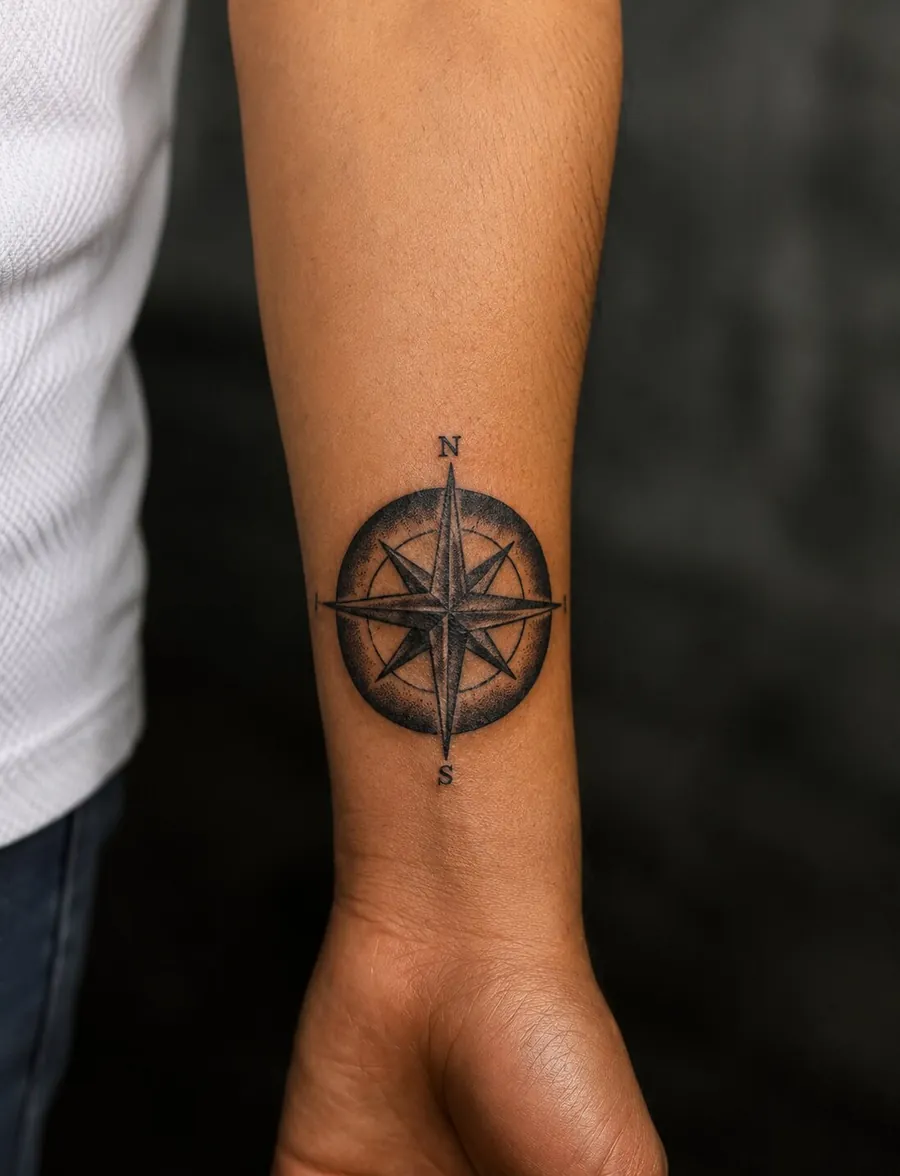
What works in a small design
A small tattoo has one job. It needs a shape that reads at a glance, lines that are not packed too close and a placement that suits its size. Busy scenes shrink badly, but a single strong symbol stays readable for years.
Ideas to start from
- Compass or arrow
- A compass stands for direction and travel, and an arrow for moving forward. Both read well at a few centimetres across.
- Coordinates or a date
- The place or the day that changed something, in small numerals or Roman numerals.
- A single word or short line
- One word in a clean font on the forearm, the ribs or the back of the arm.
- Small animal outline
- A lion, wolf or eagle as a simple outline or a solid shape.
- Mountain, wave or sun lines
- A few lines that stand for a place or a feeling, such as a trek or a coast.
Styles that suit it
Where to place it
Popular spots for men are the forearm, the outer upper arm, the calf, the ribs and the back of the neck. The forearm is easy to show and easy to cover. The ribs and the neck hurt more, and the calf and outer arm hurt less. Keep the design large enough that its lines have room, since cramped detail closes up as skin ages.
Healing and aftercare
A small tattoo heals quickly but still needs the full routine: clean hands, gentle washing, a thin layer of moisturiser, and no sun or swimming while it heals.
Read the full aftercare guide.
Questions people ask
What is the best place for a small tattoo for men?
The forearm is the common choice for a tattoo that shows, and the outer upper arm or the calf for one that is easy to cover. Choose by how often you want it seen.
Are small tattoos less painful?
They take less time in the chair, but pain depends on the spot. Bony and thin-skinned areas hurt more than muscle.
Can a small tattoo be made bigger later?
Often, if you plan for it. Tell the artist at the start so the design leaves room to extend.